

First-timers welcome
How to Beat Any Escape Room
Practical tips for better teamwork, smarter puzzle-solving, and a great first game.
Figuring out what you’re supposed to do IS the game.
10 Tips
That make you a better player!
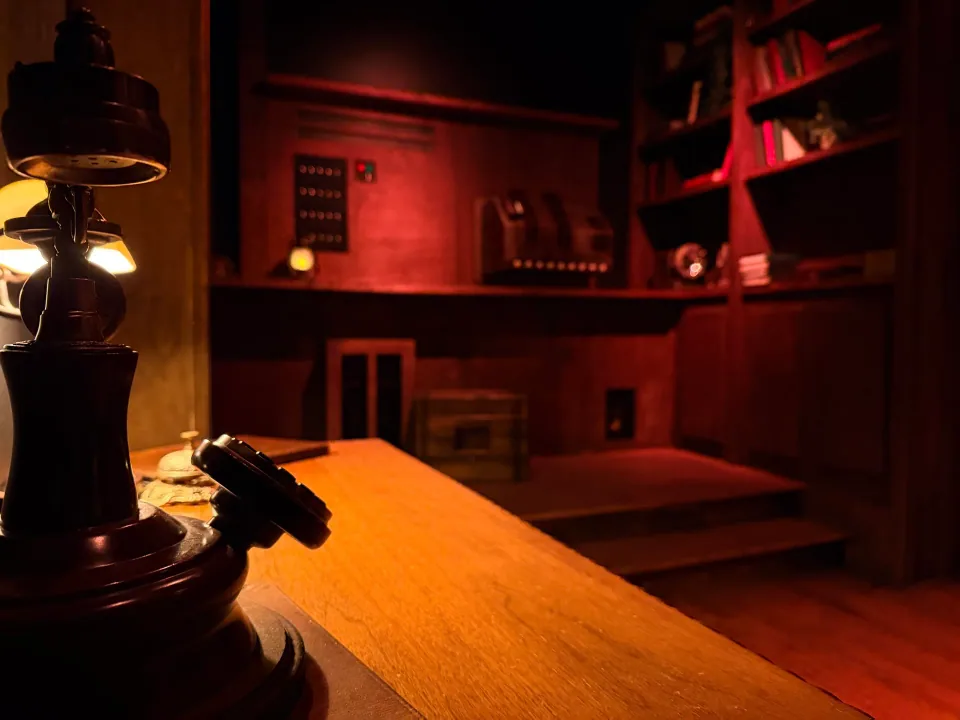
Explore with curiosity
Notice what is there before deciding what it means.
Understand the objective
Are you escaping, recovering an artifact or completing a mission? Listen for the actual goal in the briefing, along with the rules and anything off-limits. When you make a discovery, ask how it could move that mission forward. Opening a lock is progress; understanding why it matters helps you choose your next step.
Search for patterns, not just objects
A repeated symbol, a deliberate arrangement or a color that appears in two places can be more useful than another loose object. Search methodically and notice relationships: what matches, what is missing, and what looks intentionally out of place? Stay within the host’s boundaries; a clue should never require force or dismantling.
Share observations before conclusions
“There are three blue stars on this page” gives your teammates something concrete to connect. “I think this goes with that lock” gives them your theory. Share both, but distinguish what you found from what you think it means. Someone across the room may have the missing half of the connection.
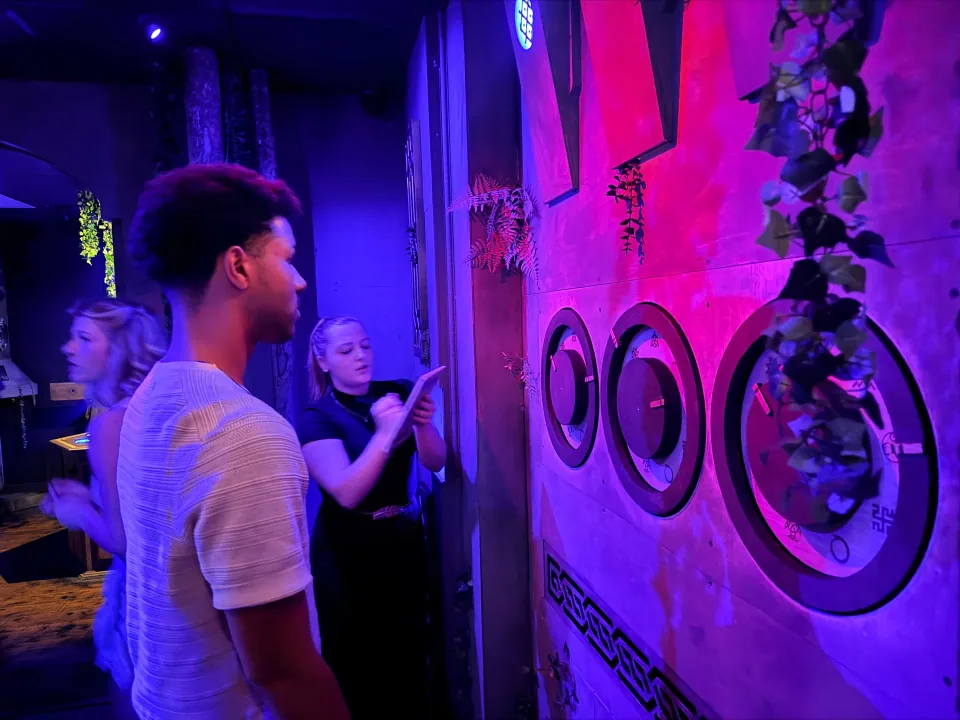
Connect as a team
The best clue might be in someone else’s hands.
Fresh eyes
After several attempts, you can become so attached to an interpretation that you stop seeing alternatives. Trade places with a teammate. Show them the clues and what you’ve tried, then let them examine the puzzle before explaining your theory. A fresh look can break the loop.
Create a discard pile
If your host confirms that clues are used only once, set solved clues and used keys in a separate spot. Keep unsolved items together elsewhere. This prevents the team from repeatedly investigating something that has already served its purpose. Some games reuse clues, so check before treating anything as finished.
Apply Ockham’s Razor
When several explanations fit the clues, start with the one that requires the fewest extra assumptions. Three symbols beside a three-digit lock? Look for a direct connection before inventing a complicated cipher. Treat simplicity as a starting point, not a guarantee: test the idea against the evidence, and change course if it doesn’t fit.
Take inventory of the unsolved
When progress stalls, regroup around three questions: What have we found but not used? What remains locked or unexplained? What information does each puzzle seem to need? Matching those loose ends can reveal a missing connection—or show that you need to search another part of the room.

Keep the fun moving
Hints and fresh eyes are part of playing well.
Use hints before momentum stalls
There’s a difference between exploring a new idea and repeating the same failed attempt. If nobody has a fresh approach, ask for a nudge. Tell the host what you’ve tried so they can help you move forward. Mystic offers unlimited hints; using one can leave you more time to enjoy the discoveries ahead.
Different brains spot different things
What’s puzzling to you may click instantly for someone else. Let a teammate take a look and explain what they see—their perspective could be what moves your team forward.
Embrace the game and your friends—not the outcome
Celebrate the discoveries, laugh at the wild theories and enjoy figuring things out together. Escaping feels great, but the time you share is what makes the game worth playing.

Your first game
You belong here.
You don’t need to be the smartest person in the room—or have played before. Bring curiosity, share what you find and ask for help when you need it. Your game is private to your group.
Make the most out of your experience.
For a balance of teamwork and hands-on play, we recommend four players in Littleton and around six in Denver. Check your room’s actual range; Freya needs at least three players.
Arrive 20 minutes early for waivers, rules and your briefing. In Denver, allow additional time for parking—and consider staying at Mystic Lounge afterward during lounge opening hours.
Different rooms. Different ways to play.
Knowing how a game is structured can help you work together. You don’t need to know its secrets—or study before you arrive.
Linear and non-linear rooms
Linear: one trail to follow
One solution unlocks the next step. For example, solving a riddle might open a box containing the clue you need next. Your team generally follows the same trail together.
How to play: share what the latest discovery revealed. If you’re stuck, let someone else look at it; six people repeating the same idea won’t move you forward.
Non-linear: several trails at once
Several puzzles are available at the same time. One pair might work on symbols while another explores a different clue. Those separate discoveries may eventually come together in a shared finale.
How to play: split up, but keep talking. A clue that means nothing to you may be exactly what another teammate needs. Regroup when a trail runs dry.
Many games mix both. A room can start with one puzzle, open into several paths, then bring everyone together again. Follow what the game makes available rather than assuming you must always stay together or always split up.
What do room “generations” mean?
Players sometimes use “generations” as shorthand for the mechanisms and presentation in an escape room. The labels are informal, so two venues may use them differently. They describe a style—not a reliable score for quality or difficulty.
Locks and tangible clues
Keys, combination locks, written clues and objects you can handle make progress easy to recognize: solve something, open something. Often called first-generation design, this can still deliver inventive puzzles and a satisfying story.
Technology woven into the room
Sensors, magnets, lighting and sound can make the environment respond to your actions. Instead of entering a code, you might arrange objects and trigger a reveal. Look and listen for what changes after your team tries an idea.
A world that responds to you
Some experiences combine scenic design, effects and connected puzzles to make you feel part of a story. The challenge is discovering how that world works. Elaborate production can add atmosphere, but clear puzzle logic and good teamwork still matter.
Choose the experience, not the generation number. A clever padlock puzzle can be more enjoyable than an elaborate effect. Look for a theme that excites your group, thoughtful design and a host who helps you feel comfortable.
Put your curiosity to work.
Choose a world your group will love.